What a freight audit catches on your LTL invoices
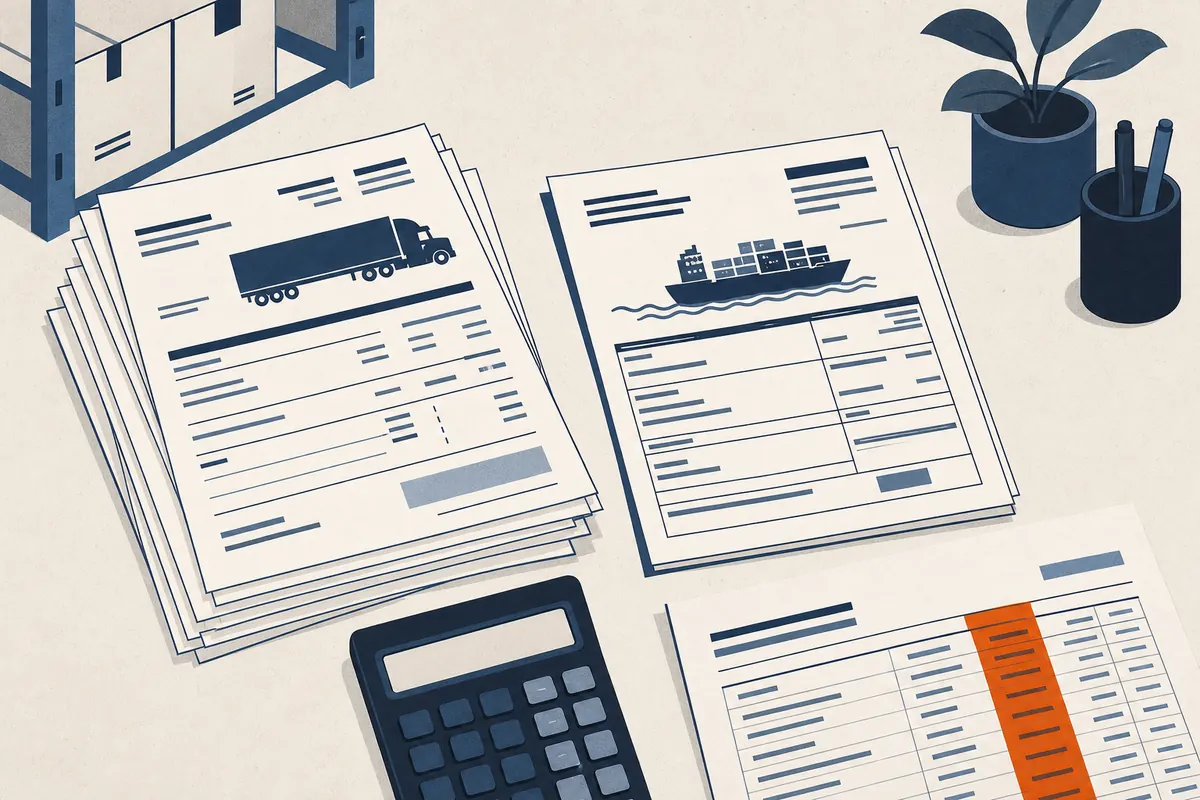
A freight audit checks each LTL invoice line against the carrier's rules tariff and the bill of lading before you pay it. It flags wrongful liftgate, residential, reweigh, and reclass charges, and confirms that any discount or off-bill allowance the carrier owes was applied. It also checks that extra labor fees were billed only when the consignor or consignee actually requested them.
- Estes Express Lines' rules tariff furnishes extra labor only when the consignor or consignee requests it.
- 49 U.S.C. 13710 gives a carrier 180 days to issue additional billing after the original bill.
- 49 U.S.C. 14705 gives you 18 months to bring a civil action to recover an overcharge.
What are freight bill audit services (and what do they actually check)?
A freight audit checks every LTL invoice line against the carrier's rules tariff before you pay it. It flags wrongful liftgate, residential, reweigh, and reclass fees. This guide names the exact tariff clauses, the bill of lading proof, and the filing deadlines you need to win a dispute.
A freight bill audit service checks three things on each line. Does the fee match an actual request? Was the discount or allowance applied? Does the tariff clause billed even exist for the shipment?
Estes Express Lines' rules tariff states that applicable discounts show as a reduction on the freight bill. The same tariff furnishes extra labor only when the consignor or consignee requests it. A freight bill audit service checks both lines before you pay, not after.
Why do LTL carriers charge wrongful liftgate, residential, reweigh, and reclass fees?
A carrier charges a liftgate or extra labor fee under a tariff clause that applies only when the consignor or consignee requests the service. Estes Express Lines' tariff furnishes extra labor on request, so a labor charge billed without that request is wrongful.
Residential, reweigh, and reclass fees follow their own tariff codes and documentation rules. For the full list of triggers behind each fee code, read our guide to LTL accessorial fee triggers.
What documentation do you need to dispute an LTL invoice error?
To dispute an LTL invoice error you need the original bill of lading and the tariff clause number the carrier billed under. You also need proof of the shipment's declared value and class.
Estes Express Lines' rules tariff limits carrier liability to the lowest of three numbers. Those numbers are the actual value at origin, the tariff valuation, or the released value under the National Motor Freight Classification 100 Series.
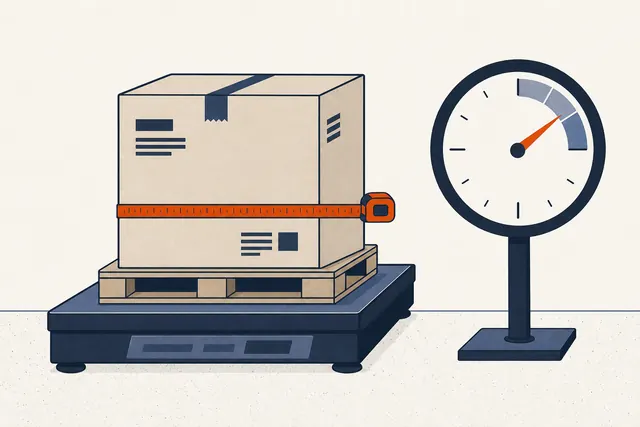
A reweigh or reclass dispute turns on the same numbers. The bill of lading's declared value and item description matter as much as the weight ticket.
Before you file, check the class your carrier used against the shipment's density with our freight class calculator. A mismatch between the calculated class and the billed class is often the whole dispute.
If you'd rather not track every clause yourself, start the free fee audit of your last 90 days of invoices.
How long do you have to file a freight billing dispute before it's too late?
Freight billing disputes run on fixed clocks set by federal law and by each carrier's own tariff, and missing one forfeits the claim.
| Type of dispute | Deadline | Source |
|---|---|---|
| Carrier issuing an additional bill | 180 days from receipt of the original bill | 49 U.S.C. 13710 |
| Unpaid allowance or off-bill discount | 180 days from the date of shipment | FedEx Freight 100-Y Rules Tariff |
| Civil action to recover an overcharge | 18 months after the claim accrues | 49 U.S.C. 14705 |
| Carrier-set claim and action periods | Minimum 9 months for claims, minimum 2 years for civil action | 49 U.S.C. 14706 |
These are federal minimums and one carrier's own tariff deadline, not a universal rule for every carrier or fee type. Check the tariff clause for the specific carrier and charge before you rely on any one deadline.
Freight audit software vs. a done-for-you audit and dispute service: which fits a small shipper?
Freight audit software flags an invoice mismatch automatically, but you still have to cite the tariff clause and attach the bill of lading. You also have to file before the 180-day or 18-month window closes.
Tarroway audits LTL invoices for wrongful liftgate, residential, reweigh, and reclass fees, then files the dispute for you. The free fee audit reviews your last 90 days of invoices at no cost. If we find recoverable fees, our contingency recovery keeps 25% of the dollars we get back. A fixed-fee reweigh and reclass check runs a flat rate per batch of up to 50 invoices. There is no minimum shipment volume and no contract.
Start with the free fee audit of your last 90 days of invoices. See which lines are worth a dispute before any deadline closes.
Where a service helps, and where it does not
You can read the rules tariff yourself and track the 180-day and 18-month windows on a spreadsheet. Tarroway turns that work into a dispute. We run the free fee audit on your last 90 days of invoices and match each line to the carrier's tariff clause. Then we file the claim before the deadline passes. You decide which fees to fight; we handle the citation, the paperwork, and the follow-up.
Where this goes wrong
| The problem | What it costs you | The fix |
|---|---|---|
| Paying a liftgate or extra labor fee without checking if it was requested | You lose the right to dispute it once the tariff's window closes | Match every accessorial line to the delivery request before the invoice is paid |
| Waiting past 180 days to flag an additional bill or unpaid allowance | The carrier keeps the charge and any owed allowance is forfeited | Set a 90-day invoice review cycle so errors surface well inside the window |
| Filing a dispute without citing the exact rules tariff clause | Carriers reject vague claims that don't point to a specific rule | Attach the tariff section number and the bill of lading to every dispute |
Built from the FedEx Freight and Estes Express Lines rules tariffs and 49 U.S.C. sections 13710, 14705, and 14706, read directly from the primary filings.
- FedEx Freight: FedEx Freight 100-Y Rules Tariff
- Estes Express Lines: EXLA 105 Rules and Regulations
- Estes Express Lines: EXLA 105 Rules and Regulations
- Estes Express Lines: EXLA 105 Rules and Regulations
- Cornell LII: 49 U.S.C. 13710: additional billing and collecting practices
- Cornell LII: 49 U.S.C. 14705: limitation on actions
- Cornell LII: 49 U.S.C. 14706: liability of carriers under receipts and bills of lading
First published September 2026. Checked in September 2026. If something here is out of date, tell us and we will fix it.